By Megan Thomas
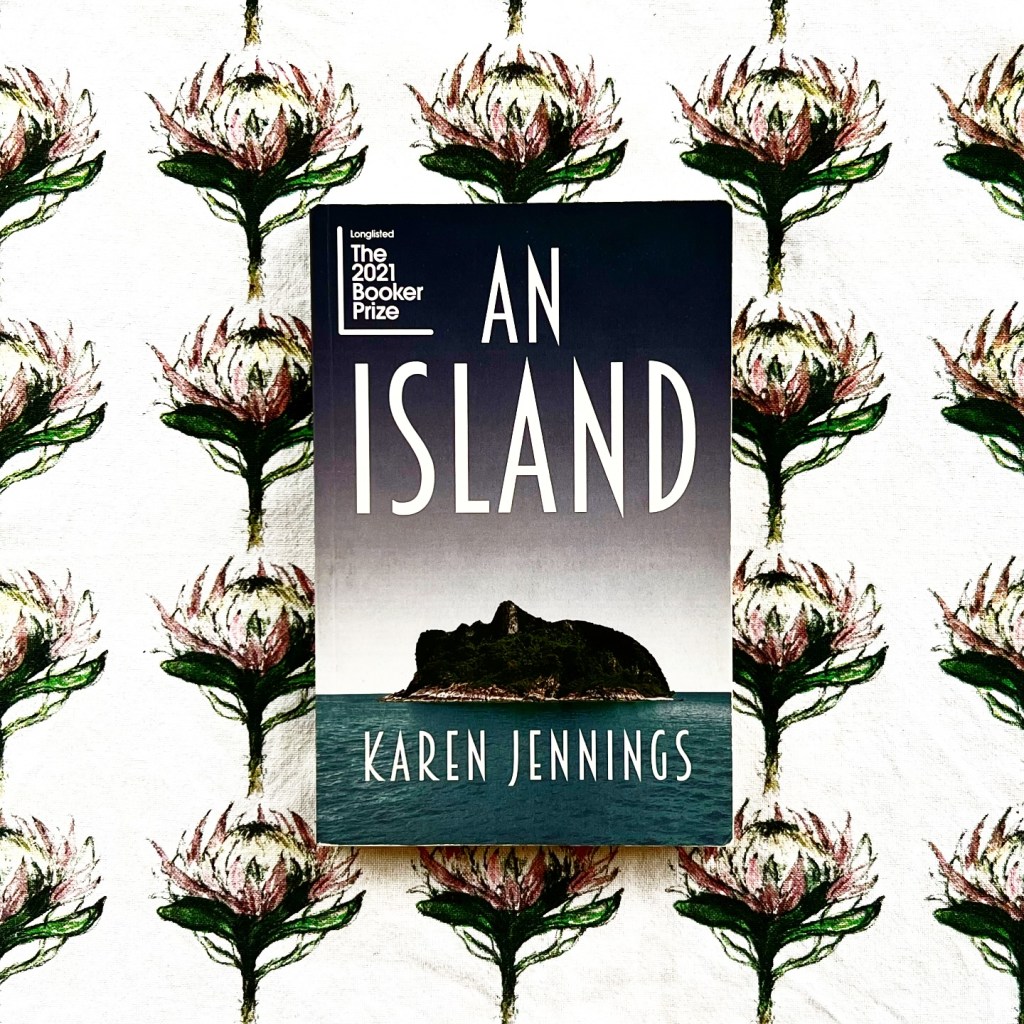
As an Island by Karen Jennings was longlisted for the 2021 Booker Prize, I knew fragments of information, namely that Jennings is South African and the premise is of a man exiled on an African island after the country gained independence. This island is certainly meant to mirror existing African countries’ experiences, but it is purposefully not based on any specific one, which I think is helpful to know because I got myself very confused trying to align the geography and historical events. With that out the way, let’s talk about what else to expect.
In terms of the linear plot, we are introduced to Samuel, an old man who has continued to live alone on an island off the coast of an African country for many years after his appointment as its lighthouse keeper has ended. One day, a refugee washes ashore while he’s going about his daily routines, which include tending to his chickens, mending the fence he has built on the island (despite him being its only inhabitant, and him not actually owning it), plucking out the indigenous weeds that clash with his sense of order. Flashbacks of Samuel’s turbulent, political past are interspersed with futile attempts to communicate in his own language with the refugee and allowing him to recuperate in his house with the goal of sending him to the mainland so he can return to his solitude.
We soon learn that living on a remote island is arguably the least interesting milestone of Samuel’s life. He has lived, with varying degrees of involvement, through his country’s colonisation, its fight for independence, its subsequent dictatorship and eventual democracy… the latter making it a desirable destination for refugees. It is only in his old age, through the lens of his unexpected lodger, that he comes to question where he was brave, weak, helpless, helpful, and whether he has done enough to see out his days in peace, without guilt or remorse.
Simply but powerfully written, this short novel is packed with lessons that ring true through history, as well as allegories that should hit home for every reader.
BUY THE BOOK: Waterstones | Amazon
Disclaimer: I earn a small commission at no extra cost to you. Please get in touch if your preferred online platform is not listed here – I’ll see what I can do!
Read more African fiction:


 Have You Read This