By Megan Thomas
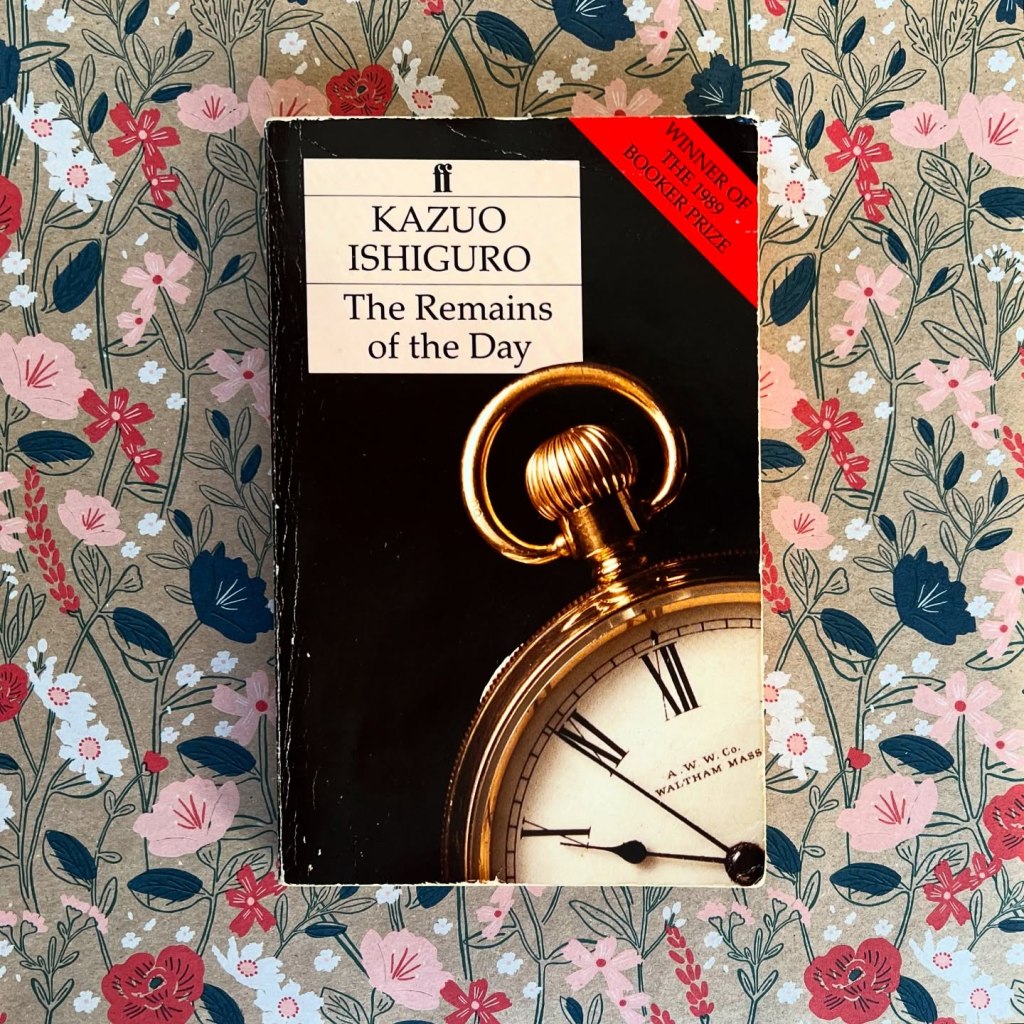
Of the eight prolific novels written by Kazuo Ishiguro, I had previously read Never Let Me Go and Klara and the Sun. Because both of these are speculative fiction, I had blindly assumed all his work had an element of this. This set me off to a confusing start with The Remains of the Day, a historical fiction novel which stays firmly rooted in reality. Once I accepted that nobody was going to turn into a robot or have their organs harvested, though, I quickly grew to adore the story.
I have often read about a book before I get to reading it – especially one like this, a Booker Prize-winner published in 1989. But as you might have guessed from the genre-confusion, I knew very little about The Remains of the Day when I started it, which in itself was a joyful and surprising experience. Since reading it, I’ve done some reading around it, and I wholeheartedly agree with a blog written for the Booker Prize site, “Where to start with Kazuo Ishiguro: a guide to his best books”, which lists this as one to read “if you want to read a perfect novel”. It also happens to list the other two I’ve read, which is reassuring, and so I’ll just keep going through that list now. Next up: The Buried Giant, for “if you like an unreliable narrator” (I DO).
Onto the story: Stevens is a butler in one of England’s ‘great houses’ before and after WWII. The novel takes place in the Summer of 1956, when Stevens’ new employer – an American who can actually afford a country manor in the wake of the war as these luxurious arrangements slowly became obsolete in England – encourages Stevens to take a six-day road-trip around the country. The narrative is Stevens’ daily evening writings, where he refers to his experiences that day, but primarily reminisces on his past – his glory days under the employment of Lord Darlington, who has since fallen from grace in reputation.
As Stevens seemingly comes to terms with the fact that he is indeed at the end of a long career, he’s grappling daily with what it means to be great, what it means to be fulfilled, and whether his life has had the meaning he has strived for as a butler. As he reflects on what remains of his life, now that this focus is dwindling, he also has to ask what it means to serve, to love, and to regret.
BUY THE BOOK: Waterstones | Amazon
Disclaimer: I earn a small commission at no extra cost to you. Please get in touch if your preferred online platform is not listed here – I’ll see what I can do!
Read more Booker Prize winners:



 Have You Read This